American Mussar

21st century Jewish spiritual practice for an authentic and meaningful life

  • About
    • About Greg Marcus
    • American Mussar Weekly Community Gathering
    • Frequently Asked Questions – American Mussar FAQ
    • Blog
    • Sign Up For the American Mussar Newsletter
    • Contact
    • Mantra Cards
      • Cart
  • Personal Transformation
  • Get Closer To Judaism
  • Empower Your Institution
  • Soul Trait Quiz
  • Book
    • Mussar Books

My Dad Had a Stroke. Mussar Spoke.

October 28, 2016 By Greg Marcus 1 Comment

my dad had a stroke
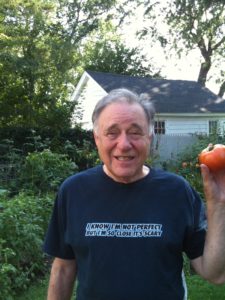
David Marcus with tomato

I’ve often said that my soul traits follow me around, but this is ridiculous. I am currently leading three Mussar groups, and my personal practice was out of sync with all of them. But after a very intense discussion about the soul trait of Loving Kindness in one of the parenting groups, some instinct told me to start on Loving-Kindness right away. We practice Loving Kindness by helping other people without the thought of reward even if they do not deserve it.

Mussar teaches that the world is built on acts of Loving Kindness. There are a few classical examples of acts of Loving Kindness, that include burying the dead, clothing the naked (usually interpreted as taking care of the poor), and visiting the sick. In each case, we are doing something that is uncomfortable, and we are not in a position to get anything in return.

Just a few days later, my cell phone rang when I was getting a decaf almond milk latte at Peets. It was my stepmother. “Oh no,” I thought. “She never calls my cell phone.”

As I feared, the news was not good:. My dad had a stroke.

My parents are divorced, and I lived with my father growing up. Suddenly this man who had raised me is weak on one side of his body, and is having trouble speaking. I feel numb in the moment, and very helpless living on the other side of the country. I wander in the street outside Peets, asking my stepmother to pause as the train blares its way into the station. It is surreal. Then I talk to him on the phone. He speaks with energy, and obvious mental clarity, but I don’t understand the words coming out of his mouth. They are slurred. Very slurred.

To be honest, I was confused about what I should do. I live in California, he lives in Syracuse. The emergency wasn’t so dire that I had to leave immediately. With my wife was in Europe, I needed to take care of the kids. I talked with my stepmother about when to come out. Our initial conversations were very much in head space – “practical considerations” about when I could be most helpful. This week, next week, the following week… Each had it’s advantages when I could be there to help with various things.

Then I sat down to journal that night, and a quiet voice spoke to me. It said “visit the sick.”

“Visit the sick” has no time qualifications attached to it. It purely exists within heart space.
And I knew what I had to do.

The voice of someone in my father’s generation came to me – “I don’t need an ancient Rabbi to tell me the right thing to do.” True. Mussar does not tell us the right thing to do. We already know it most of the time. As Rabbi Eliyahu Dessler put it, Mussar helps the heart understand what the mind already knows. Whether we like to admit it or not, the heart is in charge. The heart is stronger than the head.

So off I went to Syracuse less than 24 hours after my wife got back in town. I thought a lot about Maimonides rules for visiting the sick. They include:

  • Don’t stand over the sick person, and don’t sit on their bed. Sit on the floor or a chair
  • Don’t bring bad news, and don’t be Pollyanna about their condition either
  • Bring a gift
  • Ask permission

I am back home now. He is doing ok, but the road ahead is long. It was a hard trip, but not nearly as hard as as I thought it would be. Time flowed differently for me the last few days. I spent a lot of time just sitting, just being there.

These rules give me something to hold on to. And they remind me of a greater truth – we visit the sick to preserve human dignity, to sanctify life, and to honor the Divine Spark in all of us.

[button]Never miss a post[/button]

Filed Under: Loving-Kindness Tagged With: caring for the sick, chesed, dad stroke, father stroke, loving-kindness, Mussar, Rabbi Eliyahu Dessler

Practice Trust To Overcome Election Stress Disorder

October 17, 2016 By Greg Marcus 2 Comments

The Spiritual Practice of Good Actions
The Spectrum of Trust from “The Spiritual Practice of Good Actions” (Llewellyn)

I am upset about the election. I admit it – it has thrown me off. Political junkie combined with really caring about the outcome is a formula for losing sleep and feeling like I am in a nightmare. My mother chastened me over the weekend for letting it get to me. Don’t get me wrong – she cares too. Yet we still have to live our lives. My grandparents had daily struggles living through the depression, World War II, rationing… the list goes on. They grew strong, and learned to get through. Mussar has taught me that we need to keep striving to be a mensch even in difficult time. I’ve decided that I need to practice Trust to overcome Election Stress Disorder.

If I let a certain candidate just take over my mind, if I let the stress spill over into other parts of my life, then he wins; he, who wants to sow anger, panic, discord. After his rant about Mexican rapists, I vowed not to give him any more airtime. That is a vow I could not keep. But, I need to move back in that direction. So he will not be named here, because I am taking away his power to make me angry and upset and fearful about the future.

I feel so fortunate that my Mussar practice has taken me to the soul trait of Trust. The mantra for Trust  is:

Trust in God, but tie your camel

If you are unsure of the Divinity, think of this as a reminder that most things work out. And, a reminder that whatever happens, you will be able to handle it. And, a reminder that you only have a limited sphere of control.

For me, I’ve donated money, and speak out regularly, – my camel is tied. I need to let go of the outcome. I also have a life to live – a family to take care of, a business to run, a community to be a part of. When I get too worked up over the election, other parts of my spiritual ecosystem start to suffer. And in Mussar, the spiritual ecosystem is the real world.
I am truly tired of being slapped around by the highs and lows this last month. One of my teachers, Alan Morinis teaches a Trust visualization based on the following passage from the book of  Jeremiah ( 17:7-­8).
7 Blessed is the man who trusts in the Lord; the Lord will be his security.
8 He will be like a tree planted near water; it spreads out its roots by the river; it does not notice when heat comes; and its foliage is luxuriant; it is not anxious in a year of drought but keeps on yielding fruit.
I realize that many of you are unsure of the Divinity, and are unused to reading passages like this. Just give it a try. Imagine that you are the tree, drawing strength from the river. Your leaves are strong and vibrant, and you draw strength to maintain health and resilience through summer and winter.
That reservoir of spiritual energy is out there. God, the universe, family, community, nature… It is there. And when  you connect with it, nothing can bring you down.
I now feel calm and centered. And you are heartily invited to join me.
Want to start your own Mussar journey? Click here to take the Soul Trait Profile Quiz now

Filed Under: Featured, Trust Tagged With: Election Stress Disorder, Mussar, soul trait trust, trust in God, trust in god but tie your camel

How To Make Yourself a Mensch

September 19, 2016 By Greg Marcus Leave a Comment

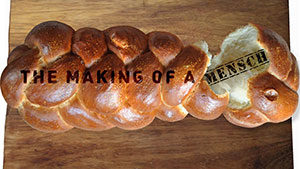
makingofamensch

When he was interviewing Tiffany Shlain about her film, “The Making of a Mensch,” radio host, author, and San Francisco State University professor Michael Krasny asked the audience to raise their hands if they thought they were a mensch. Just a few hands went up. A few more reluctantly went up when he asked who had “mensch-like characteristics.”

This reluctance to claim the mantle of a mensch goes back more than a thousand years. The Jewish sage Rava characterized people as wicked, righteous, or average, and said that he and his contemporaries were “among the average.” If a famous sage claims to be average, we should pay attention.

I don’t know how many mensches are out there, or whether you or I deserve that title. However, I do know that we all have what it takes to be a mensch. And, I know that I am more often a mensch since I started practicing Mussar.

There is a process and practice that we can follow, and if we do, we begin to walk the Path of the Mensch. This is the sentiment behind the annual Character Day, the brainchild of Emmy-nominated filmmaker Tiffany Shlain and her non-profit organization Let It Ripple. On Character Day, hundreds of thousands of people around the world will attend events with a common message: You can do better, and here is how.

Character Day has grown from 1,500 events the first year to 5,500 in the second. In this, the third year, over 81,000 events are expected on September 22, 2016. If you are local, I’d love to see you at the event I am hosting.

Character Day events feature up to three short films by Tiffany Shlain. Two, The Adaptable Mind and The Science of Character, champion a growth mindset. No matter where we are, we can change our very brains to become better people. And her third movie, The Making of a Mensch ties character growth to Mussar.

Mussar as an Opportunity to be Your Best Self

Mussar is a 1,000-year-old Jewish spiritual practice that teaches us how to find those things that cause us to get stuck in the same situation again and again, and offers a step-by-step path towards balance and healing through mindful action in everyday life. Yes, there is a solid argument that the Jews invented self-help.

I love the way that Alan Morinis, one of my teachers, emphasizes Mussar as a means to recognize and build on the goodness all around us. Not every Mussar author takes that approach. I’ve been known to skip parts of some of the Mussar classics that get too negative. For example, some books go on and on about how lowly and insignificant humans are when compared to God. I prefer sources that make the point another way – we all have a spark of the Divine, and have an opportunity to live up to our Divine potential in every moment of the day.

Many people are unsure of the Divinity. That is okay; in fact that’s common. If this is you, think of your Divine Spark as your common spark of humanity, the best of who you are that can never be taken away, ­no matter what you do.

I don’t think that it is an accident that Character Day exploded when it tied into Mussar. On a practical level, many Jewish institutions and luminaries were eager to become a part of the event. When Rabbi Lord Jonathan Sacks participates in Character Day, people pay attention. But it goes beyond that.

Mussar is practical, and draws on 1000 years of Rabbinic wisdom on how to live a good life. They offer practice advice, explaining the role of anger and jealousy in a good life, and the circumstances when too much patience is harmful to the self and others.

Mussar is also magical – it transforms people. I can’t tell you how many people have noticed changes in their lives within a few days of starting to practice Mussar. In a way Mussar is like The Matrix – no one can be told what it is, you need to experience it for yourself.

Want to join me on a Mussar journey? Start by taking a Soul Trait Profile Quiz now.

[button]Never miss a post[/button]

Filed Under: Featured, Mussar Basics Tagged With: character day, make yourself a mensch, Mussar, tiffany shlain

The Spiritual Practice of Star Trek

September 9, 2016 By Greg Marcus 2 Comments

I can’t believe that I didn’t notice that my book is being published on the 50th anniversary of Star Trek. I have been a Star Trek Fan my whole life. I am an MIT science guy, turned marketer, turned spiritual seeker. I am excited that The Spiritual Practice of Good Actions is for sale on Amazon. But I am GAGA through the roof that the publication date is on Star Trek Day. It is a spiritual convergence. It must be. It’s the Spiritual Practice of Star Trek.

I even wrote about Star Trek in the book to illustrate The Evil Inclination. Here is an excerpt.

In the episode called “The Enemy Within” a transporter accident splits Captain Kirk into the good Kirk and the evil Kirk. The evil Kirk gets into fights, swigs brandy from the bottle, and even tries to assault the beautiful Yeoman Janis Rand. The good Kirk is kind and empathic, but he can no longer make decisions and thus has lost his ability to command. Spock says to McCoy, “And what is it that makes one man an exceptional leader? We see here indications that it’s his negative side which makes him strong, that his evil side, if you will, properly controlled and disciplined, is vital to his strength.

There is a story in the Talmud that follows a similar theme. The Rabbis trapped the Evil Inclination, and initially rejoiced. Soon, however, they noticed that no one did any work and the chickens stopped laying eggs. Just as the Rabbis needed to let the Evil Inclination free into the world once again, the two halves of Captain Kirk needed to be reunited.

The Evil Inclination is a fundamental part of who we are. Our challenge is to guide our Evil Inclination towards positive contributions. For example, ambition is good when it helps you achieve things in the world. Unbridled ambition, however, can lead to unethical and anti-social behavior. – “The Spiritual Practice of Good Actions” Llewellyn p. 35

That is what I love about Mussar – it shows up everywhere. We all have what it takes to be a Mensch, a person of outstanding character. But we have this thing called the Evil Inclination that holds us back. We are faced with choices, and when we practice Mussar, we learn to channel the Evil Inclination to make us outstanding people.

If you have not already done so, please go buy a copy of The Spiritual Practice of Good Actions. People love it, and you will too. If you are a regular visitor to American Mussar, you probably have have some idea of what it is about. You’ve seen snippets – maybe the Soul Trait Profile Quiz, maybe an excerpt, and maybe the American Mussar Sampler. In the book, I bring it all together, using my own story and many stories from friends and students to illustrate how Mussar can change your life.

[button]Never miss a post[/button]

Filed Under: Featured, Mussar Basics Tagged With: evil inclination, kirk evil inclination, Mussar, spiritual practice of good actions, star trek

What Holds You Back from Repairing the World?

September 6, 2016 By Greg Marcus Leave a Comment

What Holds You Back from Repairing the World
Cutting down fruit trees in a time of war is forbidden

It would seem like not wasting resources, and preserving the world would be common sense, no brainer, consensus principles. And maybe they are in theory. But in reality, the planet is kind of a mess, and getting worse all the time. While it is tempting to throw up our hands at the scope of the problem, or to blame corporations, Mussar teaches us that we should approach life looking for small actions we can take in everyday life to bring ourselves into balance. After all, there is something inside that holds us back from doing the right thing. So the question is, what holds you back from repairing the world?

The teachings around the Commandment Bal Taschit translated as “do not destroy” are an instructive place to go as we look for soul traits to help us become more environmentally balanced within. Bal Tashchit comes from a principle that in the time of war we are not allowed to cut down fruit trees. You may eat of them, but not cut them down to make siege engines or the like. (Deuteronomy 20:19).

The Book of Education, (Sefer HaChinuch) written in the 13th Century relates this environmental stewardship to the state of the soul. It reads, “Righteous people … do not waste in this world even a mustard seed. They become sorrowful with every wasteful and destructive act that they see, and if they can, they use all their strength to save everything possible from destruction. But the wicked … rejoice in the destruction of the world, just as they destroy themselves.” (Sefer HaChinuch 529; )

If only it were that simple. We could blame the wicked for everything, secure in our knowledge that we are “outraged and sorrowful” with global warming, and the Great Pacific Garbage Patch. But if you are like me, edible food ends up in the compost bin, and a large pile of trash is hauled away from my home every week.

George RR Martin, author of the Game of Thrones books, and Tolkien, author of the Lord of the Rings have different conceptions of evil. For Tolkien, Evil is external, in the form of Sauron, a supernatural being bent on the destruction of all that is good. For Martin, the evil is inside – each of his characters have the capacity for both good and evil. And some of the most interesting characters, like Tyrian Lannister have exhibited both in plenty.

Mussar sides with Martin – we are driven by the conflict between the Good and Evil Inclinations. Rabbi Ira Stone teaches that Mussar offers an opportunity to strengthen the Good Inclination by balancing our Soul Traits, which in turn makes it easier to keep commandments like Bal Tashchit. Here are three Soul Traits we can cultivate to strengthen our ability to protect our planet.

  1. Honor, which reminds us to Honor the Divine spark in others. – People need to eat, and to destroy fruit trees makes it likely that someone will go hungry. In fact, sages of the Talmud generalized this commandment to teach that we should not wantonly spoil opportunities or resources of other people. Rabbi Abraham Isaac Kook taught that the fruit trees are an allegory of human dignity, and we are forbidden from degrading human dignity. Thus, if we focus on the needs of others, bringing our Honor towards balance, we will be less likely to waste resources.
  2. Gratitude reminds us to recognize the good and give thanks. The Book of Education teaches that the purpose of the Commandment “do not waste” is to teach us to “love that which is good and worthwhile and to cling to it, so that good becomes a part of us.” Thus by practicing Bal Tashchit we become more grateful, and conversely, if we practice gratitude, recognizing the good and appreciating what we have, we will be less likely to run out and buy the latest version of the iPhone, even though the phone we have is more than sufficient for what we need.
  3. Awe – to quote Eliza in the musical Hamilton, “Look around, Look around, at how lucky we are to be alive right now.” The Baal Shem Tov said, “The world is full of wonders and miracles, but we take our little hand and we cover our eyes and see nothing.” The world is an amazing place, and if we take some time to appreciate the beauty in the world, we will, as a matter of course, be more mindful of how we use our resources.

Thus by cultivating Honor, Gratitude and Awe, we strengthen our Good Inclination, and can more easily keep the Commandment “Do Not Waste.” What is one small action you can take in your life to cultivate balance in one of these traits?

If you would like to start your own Mussar Journey, take the Soul Trait Profile Quiz right now.

[button]Never miss a post[/button]

Filed Under: Awe, Featured, Gratitude, Honor Tagged With: Bal Taschchit, do not waste, Mussar

  • « Previous Page
  • 1
  • …
  • 5
  • 6
  • 7
  • 8
  • 9
  • …
  • 12
  • Next Page »

Search

Recent Posts

  • How Much Space Should I Take Up? A Mussar Reflection on Humility
  • When 9/11 and Elul Collide: A Mussar Reflection on Life and Death
  • Psalm 27 2025 Workshop Materials
  • Finding Awe During Life Transitions: A Mussar Perspective
  • Five Mussar Traits to Help You Move

LINKS

  • Judaism Unbound
  • The Mussar Institute
  • Center For Contemporary Mussar
  • Character Day
  • Kirva
  • Rabbi Chaim Safren video blog

Copyright © 2026 · Greg Marcus | Site-AskMePc | Log in