American Mussar

21st century Jewish spiritual practice for an authentic and meaningful life

  • About
    • About Greg Marcus
    • American Mussar Weekly Community Gathering
    • Frequently Asked Questions – American Mussar FAQ
    • Blog
    • Sign Up For the American Mussar Newsletter
    • Contact
    • Mantra Cards
      • Cart
  • Personal Transformation
  • Get Closer To Judaism
  • Empower Your Institution
  • Soul Trait Quiz
  • Book
    • Mussar Books

Time To Leave Your Post Election Cave

January 26, 2017 By Greg Marcus Leave a Comment

Time To Leave Your Post Election Cave
Gender inequality awareness idea by craftivist collective via Flickr CC

As you may know, after the election, I stopped reading the news and in many ways went into a cave. It was not a very Jewish thing to do. Unfortunately, we do not have the luxury of checking out and ignoring the world. To quote Rabbi Yisroel Salanter, the founder of the 19th Century Mussar Movement, “One who lives a life of tranquility in the service of God knows nothing about true service.” As I wrote in my book, this quote really gobsmacked me when I first read it. But I came to understand that the point is that our job on this planet is to make the world a better place. And we can’t do that if we are focused on being blissed out all the time. Even if you are unsure of the Divinity, the point still applies.

In my own defense, it was a tough time for me. As I wrote previously, my father had a stroke in late October, and I was pretty shattered by the whole experience. Thank you if you were one of many  who reached out over the months to ask how he was doing. I am happy to report that he finally came home a few weeks ago, and is doing much much better. Still lots of rehab work to do, but being at home with his wife and cat has been a big moral boost. Sometimes we need to withdraw to take care of ourselves, and when it is over, we need to get back in the game.

A friend of mine last week said that after the inauguration was a great time to leave your post election cave. He was referring to the literal sense, of coming out and reengaging in life. Neither of us is happy about the outcome, but this is the world and we need to live in it.

I immediately thought of the cave on a metaphorical level. Plato wrote that most people live life as if they were chained in a cave, and could only look at shadows of the real world on the wall. Very few people can break free of those chains and see the world the way it really is. Wow, does that fit the world today. We can’t agree on the facts, and the media seems helpless to take a stand over what is True. That is a post for another day.

On a personal level, I am working on the Soul Trait of Watchfulness. It is very much Jewish Mindfulness, watching oneself, and trying to see life the way it really is. That is a key part of Mussar – and Jewishness – to see the world the way it really is, and to jump in to close the gap with the way it could be. There is no closing in the gap while huddled in a cave, watching shadows on the wall, wringing our hands, or preaching to or listening to the chorus.

How Awake do you think you are? How much are you watching shadows versus striving to see the underlying reality beyond what is being shown to you?

Comment below and let me know.

Filed Under: Featured, watchfulness Tagged With: Jewish, jewish mindfulness, Mussar, post-election, truth, watchfulness

2016 Was a Year of Wonder

January 4, 2017 By Greg Marcus Leave a Comment

2016 Was a Year of WonderAs I wrote in my last post, I was among many people who felt an urge to wish 2016 away. It was a year of personal and emotional hardship for me in many ways. It started with two friends who died in their 50s… at this point I have a mental list of people with cancer, personal illness, and a litany of bad news in 2016, culminating with you know who and you know what. That is yesterday’s bad news. Today I realize that 2016 Was a Year of Wonder


I am practicing Gratitude, which sports the mantra “Give thanks for the good and the bad.”
One of the things I am most Grateful for is Hanukkah – it brought light at a time of darkness.  One of you wrote the following in response to last weeks post, and it give me hope. You wrote, If 2016 has thought me anything, it’s that life has its own story and how that story is told is determined by those who live in it who can set the darkest of nights against the backdrop of a new dawn and day! Better times will come.


Another one of you wrote a moving tribute to your father who passed away. I love the way you said My father was known for his kindness…and while I am good at being kind to strangers, it is those I am closest to that I wish to work on being more of that with. I can so relate to that – I too want to be better with those closest to me. And my fathers illness brought us closer this year.


In addition to the litany of bad news, 2016 was a year of absolute wonder for me. Just before writing you, I did the 15 Minute Gratitude Challenge, and identified some amazing milestones last year:  One daughter became Bat Mitzvah, and another was confirmed. One daughter discovered a love of volleyball, and the other got her drivers license. My wife had a meaningful milestone, and she and I celebrated our 19th wedding anniversary. My cats turned seven, and I turned 50. And my dream of having a Mussar book was realized. The outpouring of love an support related to the book has truly been remarkable.


But none of that compares to the miracle of the Cubs winning the world series. I mean seriously, who can’t feel good about that? No, Cleveland fans, of course I did not forget you. I’m sure you are really bummed, but I also suspect at least some of you feel hope that if the Cubs can win, then the Indians day will come too. And the Cavs won it all, beating my Warriors. You see, for every winner in sports, someone has to lose. For every loss in an election, someone wins.


In Mussar, there are no winners or losers. Why? Because Mussar is a spiritual exercise. It looks at the world differently, with a sense of wonder and gratitude. It does not mean that there are not issues to deal with. There are, but with a spiritual outlook the context and coloring is improved. Our task is to improve ourselves, which adds light to the world, and makes everyone else better too.


But I really got energized and jazzed reading this list of amazing things that happened in 2016. Please skip the beginning of the article that rehashes the sorrow of 2016. A few things on the list with particular meaning for me:
  • 200 people attending the funeral of a homeless vet with no family. This is just awesome, and reminds me of the Jewish practice of everyone standing and reciting Kadish (the mourning prayer) in services together. Even if we do not have someone specific we are saying Kadish for, we say it for those who may not have someone to say it for them, or for people who died in the Holocaust and may not have family left today.
  • New chemotherapy treatments, robotic limbs directly connected to the brain, and a decrease in child mortality worldwide. As Rabbi Yitz Greenberg reminded me earlier this year, Jews are on team life. How can I not rejoice at this news?
  • Portugal and Costa Rica ran their entire countries on renewable energy for a few days, India planted 50 million trees in 24 hours, and California has 6 million solar roofs. And, Pandas and many other animals came off the endangered species lists. This is significant progress in our task to repair the world.


This list, and the Twitter hashtag #GoodThingsin2016 that reminds me of advice from Fred Rogers, who reminded us that in every disaster, there are always helpers. And Mussar teaches us that we have a choice whether or not to be a helper.


I’ll admit it – I am feeling super energized by writing you this letter. I am reminded of the time when I was a super helper last year – I left my power cord at the library with a young woman taking her end of year exams. I was awake enough and aware enough to see an opportunity to make someone’s day. That was an easy one. Now the task is to find a way to be a helper every day.


Should we have a live event, a Google hangout or Zoom video call to share some of the experiences we had helping others in 2016?


For now, you are invited to do three things.
1. Take the 15 minute Gratitude Challenge. Click Here to take the challenge.
2. Read about the amazing things that happened in 2016, and then comment below to let me know what resonates with you.
3. Set an intention for 2017 – what will you do to be a helper?


2016 Was a Year of Wonder, if we remember to look for it.


Here’s to an amazing 2017, filled with wonder and community.


Want to learn more about Mussar and Gratitude? Here’s a free preview of the Gratitude content from the American Mussar cycle.

Filed Under: Awe, Featured, Gratitude Tagged With: awe, choice points, gratitude, Hanukkah, Mussar, mussar yirah, wonder, year of wonder

What is Mussar?

December 16, 2016 By Greg Marcus Leave a Comment

what is mussar
Excerpt from “The Spiritual Practice of Good Actions”

What is Mussar?

Believe it or not, there is a solid argument that the Jews invented self-help over 1000 years ago. At the time, the Rabbinic scholars were trying to understand why it is so hard to be good. The Ten Commandments and other Jewish teachings clearly spell out how we should act. Yet many of us, both now and then, violate either the letter or the spirit of these commandments quite regularly. One of the answers to this question was Mussar.

Mussar is a practice that gives concrete instructions and guidelines to help you live a meaningful and ethical life. The first Mussar book was Duties of the Heart by Rabbi Bahya ibn Paquda, which was written in eleventh century Spain. Rabbi ibn Paquda clarified a central tenet of Mussar: Following the spirit of the commandments is just as important as following the letter of the Law. For example, he scorns a scholar who focuses on pointless intellectual exercises instead of working to become a better person,[1] and he praises a scholar who worked for 25 years refining his conduct.[2]

In the ensuing centuries, the Mussar literature grew as scholars contemplated how various character traits like humility, patience, anger and jealousy contribute to a good life. Mussar became a widespread movement in Eastern Europe starting in the early 19th century under the leadership of Rabbi Yisroel Salenter. Rabbi Salenter transformed Mussar from a solitary practice to something practiced in community. Throughout it’s history, Mussar masters used real world examples, and describing situations that are often as relevant today as they were hundreds and thousands of years ago. In short, the struggles of our soul have not changed.

The fact of the matter is that we all have issues, whatever our religion or level of spirituality. Mussar teaches how to find those things inside that cause us to get in the same situation over and over again. And, it provides guidance for how we can begin to make small changes in our lives to help bring healing to the Soul through greater balance. Rabbi Elya Lopian (1876-1970) defined Mussar as “making the heart feel what the mind understands.”[3] I love this definition, because so often we know what we should be doing, but we just can’t seem to make ourselves do it.

Mussar can be translated from Hebrew to mean, “correction” or “instruction.”[4] In modern Hebrew, Mussar means ethics. When we practice Mussar, we are adjusting and correcting our Soul. But we don’t try to adjust the whole thing at once. Rather, we focus on specific parts of the Soul called Soul Traits.

Real World Spirituality

Compared to Mussar, Kabbalah is the more widely known branch of Jewish spirituality. Kabbalah is spiritual/mystical and focuses on the unseen forces in the universe. Mussar is spiritual/practical, and focuses more on our inner world, and how it impacts the choices we make day today. I’ll be the first to admit that I don’t know a lot about either traditional or modern Kabbalah. I do know that there is significant overlap in the traditional Mussar and Kabbalistic literature. If you are currently a seeker who has explored Kabbalah, Mussar will complement and enrich your understanding. If you find Kabbalah a bit too “out there,” you will be able to relate to the Mussar because it is a very grounded practice.

The great 20th Century Mussar master Rabbi Schlomo Wolbe defined spirituality as building your interior world,[5] and Mussar is the process we use to build it. In Judaism, we don’t wake up, decide to be spiritual, and then book a retreat to a mountain top for contemplation. Jewish spirituality is doing the inner work, to change our very Souls to become better at living in the real world. We are not expected to become great over night, and we only strive to become a little better than we were the day before.

One of my teachers Alan Morinis writes that we each have our own unique spiritual curriculum, meaning that we each have our own path in life, with a unique set of challenges and opportunities. We are presented with the same test over and over again until we pass it.[6] For example, my trait of Humility is out of balance – I have a tendency to be arrogant. My arrogance hurt my relationships with others, especially my coworkers, for years. Each chance I had to say something arrogant was a test, and until I learned to make room for other people’s opinions and feelings, I was caught in this cycle of starting well on a job, and then gradually losing support from my colleagues. When I started bringing my Humility into balance, I started keeping my mouth shut, (“passing the test,”) and became easier to work with. As a result, I was spared a lot of unnecessary stress and conflict.

As this example also illustrates, Mussar teaches that actions count – in fact only actions count. We all have good intentions, but more often than not our intentions don’t translate into good actions. Mussar brings our actions and intentions into alignment with Jewish values. What are Jewish Values? Rabbi Hillel summarized it best: “That which is hateful to you, don’t do to another. The rest [of the Torah] is just detail.”[7] Mussar offers key insights to help us understand why we sometimes do the right thing, and sometimes not. Hillel was articulating the Jewish version of the Golden Rule, more commonly knows as, “Do unto others as you would have them do unto you.” Whether or not you are Jewish, it is hard to argue with the Golden Rule as a universal ethical principle. Mussar turns real world situations into opportunities for spiritual growth, which in turn make the world a better place.

From The Spiritual Practice of Good Actions by Greg Marcus, PhD. © 2016 by Greg Marcus, PhD. Used by permission from Llewellyn Worldwide, Ltd.www.Llewellyn.com.

Want to learn more about Mussar? Check out this article Greg Marcus wrote for MyJewishLearning.com.

[1] Rabbi Bachya ibn Pacuda, Duties of the Heart, Hebrew trans. Rabbi Yehuda ibn Tibbon Feldheim, English trans. Daniel Haberman (Jerusalem: Feldheim, 1996) 1:23.

[2] Ibid 1:25.

[3] Morinis, With Heart in Mind, 6.

[4] Alan Morinis, Everyday Holiness: The Jewish Spiritual Path of Mussar (Boston: Trumpeter, 2007), 8.

[5] Alan Morinis, With Heart in Mind: Mussar Teachings to Transform Your Life (Boston: Trumpeter, 2014), 13.

[6] Morinis, Everyday Holiness, 3.

[7] Talmud Shabbat 31a.

Filed Under: Featured, Mussar Basics Tagged With: jewish self help, Mussar, real world spirituality, what is Mussar

What’s In It For Me? How Moses Answered the Call to Conscience

November 28, 2016 By Greg Marcus Leave a Comment

What's In It For Me

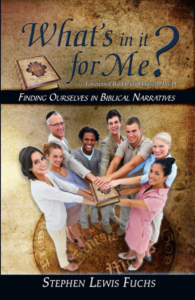
Today, I am pleases to share with you an excerpt from What’s In It for me: Finding Ourselves in Biblical Narratives by Rabbi Stephen Fuchs.

I rarely post excerpts from books or have guest posts on American Mussar. I picked this one because I love the way Rabbi Fuchs brings the biblical story of Moses into the realm of human decision making. If you are unsure of the Divinity, where the text says things like “God spoke” think of it as the Universe, or the internal Divinity, that spark of goodness that no one can take away.  

I can only hope that I will never be challenged with a task as great as the one that confronted Moses. Yet I can relate to the idea of being overwhelmed by a great task, and the importance of not ignoring the quiet voice of conscience.

Chapter 11: Moses Answered the Call to Conscience. Will We?

Moses grows up as an Egyptian prince. According to the Midrash, his mother, Yocheved, teaches him about his heritage and the importance of loyalty to his people. Her efforts pay off.

One day, as Moses walks among the Hebrew slaves he encounters an Egyptian taskmaster beating one of them. An Egyptian prince should not care, but Moses smites the Egyptian.

In one of the most profound of all Midrashic statements, the Eternal One observes Moses’ action and says, “Moses, if you have descended from your high station to take up the case of a Hebrew slave, then it is time for Me to descend from my high station and redeem my people, the Children of Israel” (Shemot Rabbah 2:2).

Wow. It doesn’t get more dramatic than that. Imagine, through our acts of righteousness, we are capable of influencing the Almighty. The notion of a God responding positively to human goodness is one of the most revolutionary ideas in the Torah.

Unfortunately, because he smote the taskmaster, Moses has to leave Egypt and his princely status behind. Again, he is a role model for us and encourages us to consider one of life’s most vital questions: What is more important? Success and reward? Or doing what is just and right?

Moses traverses the desert, arrives in Midian, meets (like Jacob and Isaac) his wife-to-be at a well, and eventually settles into a comfortable existence as shepherd for his father-in-law, the Midianite priest, Jethro.

Later, Moses encounters God, calling him back to Egypt from a burning bush. A burning bush, as the rabbis note, was hardly a dramatic event in the desert. It took a person with extraordinary insight to realize the bush did not go up in flames, and to listen to the voice of God calling from within [Louis Ginzberg, Legends of the Jews, (Philadelphia, Jewish Publication Society of America, 1968) Vol. 2, 304].

People often ask me, “Why doesn’t God speak with us anymore?” I believe God does, but we must learn how to listen to God’s voice. Like Cain, we can choose to ignore the voice or defy it. If we train ourselves to not only hear, but to listen, God will speak to us in the voice of our conscience⎯just as God spoke long ago. We must strive to recognize that voice urging us to choose the path of righteousness and justice over that of expedience and narrow self-interest.

Although Moses clearly heard God’s voice, initially, he was reluctant to heed it. He throws every possible excuse at the Almighty: “Who am I,” he asks, “to go before Pharaoh? I don’t speak very well.” But God would not be dissuaded (Exodus 3 and 4).

The task God had chosen Moses to undertake was enormous. Moses had to convince himself, that he was the man for the job.

Fortunately, Moses heeded God’s voice and fulfilled his destiny. Perhaps there is only one real difference between Moses and Cain. Cain turned away from God’s call, but Moses obeyed it.

Think of it. The Torah teaches that our lives can have purpose and meaning. The rest is up to us. God wants us to try our best⎯setbacks and frustrations notwithstanding⎯to use our talents to make the world better. We do not all have the ability to lead a nation, cure cancer, or invent a life-changing device, but we all can do something to make life better for others. Cain said no to God. Moses said yes. Perhaps the most important question we can ask ourselves is, “What will our answer be when God⎯in whatever mysterious way God chooses⎯affords us a glimpse of our potential destiny?”

Rabbi Stephen Lewis Fuchs is Rabbi Emeritus of Congregation Beth Israel, West Hartford, Connecticut and the former President of the World Union for Progressive Judaism. Earlier is his career he served at Temple Isaiah in Columbia, Maryland and at The Temple, Congregation Ohabai Sholom in Nashville, Tennessee. Since 2014 Rabbi Fuchs and his wife Victoria have spent several weeks in Germany raising Holocaust awareness in secondary schools and speaking in synagogues, churches and universities. They are the proud parents of three children and five grandchildren. Please visit  http://www.rabbifuchs.com to learn more.

[button]Never miss a post[/button]

Filed Under: Featured, guest post, Humility, Loyalty Tagged With: moses answered the call to conscience, rabbi stephen fuchs, what's in it for me

Help Pick the Final Mantra Card Design

November 22, 2016 By Greg Marcus 21 Comments

mantra-cards-watermark-copy

Mussar practice starts every morning with a mantra – a recititation of a phrase to help frame the day. By repeating, or singing, the phrase over and over again, we are making an impression on our soul, and heightening our awareness of how that soul trait comes into play.

I am excited to announce that we are in the final stages of designing mantra cards to go with The Spiritual Practice of Good Actions. 

Rather than write the mantra on a sticky note, or on an index card,

mantra-cards-no-watermark

why not just get a high quality set of cards? Just grab the card for the soul trait you are working on, and put it on your bed table.

We need your help to pick the final design. In the comments below, please let us know which design 1-4 you like.

Or alternatively, you can join the conversation on the American Mussar Facebook page. 


[button]Never miss a post[/button]

Filed Under: Featured, Mussar Basics

  • « Previous Page
  • 1
  • …
  • 19
  • 20
  • 21
  • 22
  • 23
  • …
  • 30
  • Next Page »

Search

Recent Posts

  • Is Kindness the Real Punk Rock? A Mussar Reflection on Honor and Equanimity
  • How Much Space Should I Take Up? A Mussar Reflection on Humility
  • When 9/11 and Elul Collide: A Mussar Reflection on Life and Death
  • Psalm 27 2025 Workshop Materials
  • Finding Awe During Life Transitions: A Mussar Perspective

LINKS

  • Judaism Unbound
  • The Mussar Institute
  • Center For Contemporary Mussar
  • Character Day
  • Kirva
  • Rabbi Chaim Safren video blog

Copyright © 2026 · Greg Marcus | Site-AskMePc | Log in